Digging Deep: The Kola Superdeep Borehole
The Kola Superdeep Borehole, located on the Kola Peninsula in Russia, holds the distinction of being the deepest artificial point on Earth. Reaching a depth of over 12 kilometers, this scientific drilling project provided unprecedented access to the Earth’s crust. Initiated during the Cold War era, the project aimed to explore the deep geological layers and answer fundamental questions about the planet’s structure and composition. The borehole remains a testament to human curiosity and the pursuit of knowledge, offering insights that continue to influence geoscience today.
The project began in 1970 and continued for nearly two decades, with drilling operations ceasing in 1992. The primary goal was to reach a depth of 15 kilometers, but technical and thermal challenges halted progress at 12,262 meters. Despite falling short of its target, the borehole yielded a wealth of data that challenged existing theories about the Earth’s crust. The findings from the Kola Superdeep Borehole have had lasting implications for geology, geophysics, and the understanding of deep subsurface environments.
This article examines the scientific objectives, key discoveries, and engineering obstacles associated with the Kola Superdeep Borehole. It also considers the broader context of deep drilling and its role in advancing knowledge about the planet’s interior.
Scientific Goals and Objectives
The Kola Superdeep Borehole was designed to investigate the structure and composition of the Earth’s continental crust. Unlike oceanic crust, which is thinner and more readily accessible, continental crust can extend to depths of 30 kilometers or more. The borehole aimed to penetrate the upper crust and provide direct samples and measurements from depths never before reached. Researchers hoped to gain a better understanding of the thermal regime, pressure conditions, and the nature of rocks and fluids at these depths.
One of the key scientific questions concerned the presence of the Conrad discontinuity, a postulated boundary between the granitic and basaltic layers of the crust. Seismic data suggested that such a boundary should exist, but the borehole did not encounter a clear transition at the expected depth. This finding indicated that the crust is more heterogeneous than previously thought, with variations in rock types and properties occurring over relatively short distances. The lack of a definitive boundary prompted a reassessment of models describing crustal layering.
Another objective was to study the thermal gradient of the crust. Early measurements indicated a gradient of about 10 degrees Celsius per kilometer, but as drilling progressed, the temperature rose faster than anticipated. At the final depth, the temperature reached approximately 180 degrees Celsius, far higher than the predicted 100 degrees Celsius. This observation has important implications for understanding heat flow in the Earth, the formation of geothermal energy, and the stability of deep geological formations.
Key Scientific Discoveries
The borehole provided a unique opportunity to analyze rock samples from the deep crust. One of the most significant findings was the presence of water at great depths. Contrary to expectations that fractures would seal at high pressure, the borehole revealed that open fractures and porous rocks contained water. This water is believed to originate from mineral dehydration processes and has implications for the movement of fluids in the crust, the genesis of ore deposits, and the potential for life in deep subsurface environments.
Microscopic fossils were discovered in rocks from depths of 6 to 7 kilometers. These fossils, which may be remnants of ancient plankton, provided surprising evidence that biological material can be preserved in extreme environments. The discovery has sparked interest in the deep biosphere and the limits of life on Earth. It also raises questions about the possibility of life in similar environments on other planets, such as Mars.
Another major discovery was the unexpected degree of rock alteration and metamorphism at depth. The borehole encountered zones of mylonite and breccia, indicating that the crust has undergone intense deformation. These zones are associated with faults and fractures that facilitate the movement of fluids and contribute to seismic activity. The data collected have helped refine models of crustal deformation and the role of fluids in rock mechanics.
Additionally, the borehole revealed the presence of methane and other gases at depth. Elevated concentrations of methane were detected in water samples, suggesting that abiotic methane can be generated in the crust. This finding has relevance for the study of natural gas reservoirs and the global carbon cycle, as well as for the exploration of unconventional gas resources.
Engineering and Technical Challenges
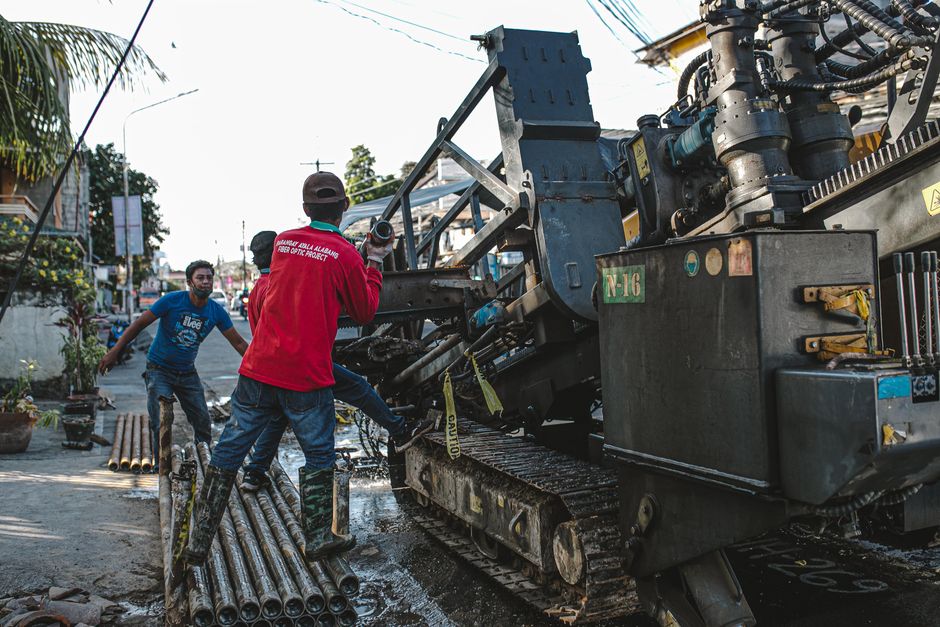
Drilling to such extreme depths presented numerous engineering challenges. The increasing temperatures affected the drilling equipment and the properties of the drilling mud, which became less effective as a coolant and lubricant. The drill string also experienced significant torque and drag, making rotation and vertical control difficult. The borehole had to be periodically sidetracked to bypass drilling tools that had become stuck or broken, resulting in several branches from the main shaft.
The high temperatures also impacted the measuring instruments. Standard electronic tools could not operate reliably at temperatures above 150 degrees Celsius, so special high-temperature versions had to be developed. The project involved creating custom logging tools and downhole instruments capable of withstanding the harsh conditions. These technological developments have had lasting benefits for the wider drilling industry, particularly for geothermal drilling and deep oil and gas exploration.
Another challenge was the stability of the borehole itself. The surrounding rock exerted strong stresses, leading to borehole collapse and deformation. This required the use of heavy casing and specialized cementing techniques to maintain the integrity of the hole. The experience gained in managing these issues has informed best practices for deep drilling projects around the world.
Implications for Deep Drilling and Geoscience
The Kola Superdeep Borehole has had a lasting impact on the field of deep drilling. It demonstrated that drilling to depths of more than 12 kilometers is technically feasible, though the challenges increase dramatically with depth. Subsequent scientific drilling projects, such as the Integrated Ocean Drilling Program, have built on the technologies and methods developed at Kola to explore oceanic crust and sedimentary basins. The borehole also serves as a reference point for understanding the limits of current drilling technology and the need for further innovation.
From a scientific perspective, the data collected continue to be analyzed and reinterpreted. The borehole has become a natural laboratory for studying deep crustal processes, including rock-fluid interactions, the thermal evolution of the crust, and the origins of seismic reflectivity. The legacy of the Kola Superdeep Borehole extends beyond its immediate findings, shaping research questions and methods in geoscience.
The project also highlighted the importance of collaboration between geologists, engineers, and other specialists. The interdisciplinary nature of the work was crucial to overcoming the technical hurdles and maximizing the scientific return. The borehole serves as an example of how fundamental research can lead to practical innovations and a deeper understanding of the planet.
The Kola Superdeep Borehole is more than a record-breaking hole; it is a window into the deep Earth, offering a glimpse of the conditions and processes that shape the planet.
The Legacy of the Kola Superdeep Borehole
Today, the Kola Superdeep Borehole is a tourist attraction, with visitors able to see the reinforced cap that seals the hole. While the site is no longer active, it remains a symbol of human achievement and the pursuit of knowledge. The borehole continues to inspire questions about what lies beneath our feet and the extent to which we can explore the deep Earth.
The findings from the Kola project have been incorporated into geological surveys and textbooks, providing a baseline for understanding the continental crust. They have also sparked discussions about the potential for further deep drilling, such as proposals to drill through the Earth’s crust to reach the mantle. These ambitious projects remain in the realm of speculation, but they build on the lessons learned from Kola.
In summary, the Kola Superdeep Borehole represents a remarkable feat of engineering and a significant milestone in the Earth sciences. Its contributions to knowledge about the deep crust are invaluable, and its legacy endures in the ongoing efforts to explore the planet’s interior. As technology advances, the experience gained from Kola will likely inform new attempts to probe deeper into the Earth.