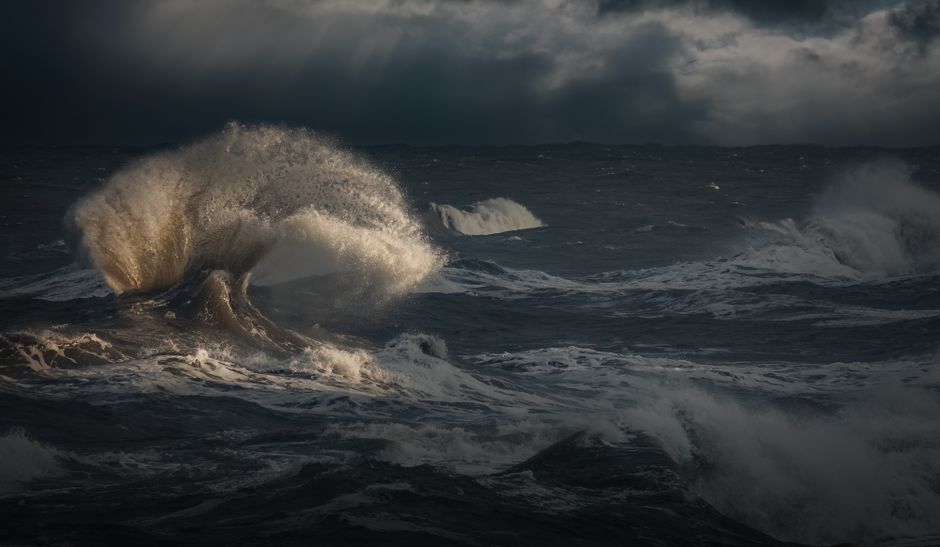
Rogue Waves: The Ocean’s Hidden Giants
Rogue waves, also known as freak waves or extreme storm waves, have long been a subject of maritime lore and scientific inquiry. These massive walls of water, which can reach heights of 30 meters or more, appear suddenly and without warning, often in otherwise moderate sea conditions. For centuries, they were dismissed as sailors’ tales, but modern oceanography has confirmed their existence and is now working to understand their formation and predict their occurrence. This article explores the nature of rogue waves, their impact on ships and offshore structures, and the technological advancements that are improving our ability to forecast these oceanic anomalies.
The study of rogue waves is not merely an academic pursuit; it has profound implications for marine safety and engineering. Unexpected encounters with these waves have been implicated in numerous maritime disasters, from the loss of cargo ships to damage to offshore platforms. By examining the physical mechanisms behind their formation, researchers aim to develop early warning systems and design vessels and structures capable of withstanding their immense forces. This article will delve into the current state of knowledge, highlighting both the challenges and the progress in this field.
The Nature of Rogue Waves
Rogue waves are defined as waves whose height is more than twice the significant wave height (the average of the highest one-third of waves) in a given sea state. Unlike typical large waves that occur during storms, rogue waves can strike in relatively calm seas, making them particularly dangerous. Their sudden appearance and towering height can overwhelm even the most experienced mariners and the most robust ships. The exact mechanisms that cause these waves are still not fully understood, but several contributing factors have been identified.
One of the primary mechanisms is constructive interference, where multiple waves of different directions and speeds combine to form a single, much larger wave. This phenomenon is akin to the way ripples in a pond can merge to create a larger wave. Another factor is the focusing of wave energy due to ocean currents, such as the Agulhas Current off the coast of South Africa, where rogue waves are more frequently observed. Additionally, nonlinear effects, where the wave shape becomes unstable and steepens, can lead to the formation of these giants. Research in this area is ongoing, with hydrodynamic laboratories and computer simulations providing valuable insights.
The unpredictable nature of rogue waves makes them a significant hazard. Even with advanced radar systems and satellite monitoring, they are notoriously difficult to spot in time. Historically, many incidents were attributed to other causes, such as hull failure or structural fatigue, but as awareness has grown, more cases are being re-evaluated. The sinking of the MV München in 1978, for example, is now believed to have been caused by a rogue wave, as the ship sent a distress signal before disappearing without a trace. Such events underline the need for better understanding and prediction capabilities.
The Devastating Impact on Ships and Offshore Structures
The forces exerted by a rogue wave are staggering. A wave of 30 meters can exert pressures of up to 100 tonnes per square meter, enough to bend steel and shatter reinforced glass. For ships, the danger lies not only in the wave’s height but also in its steepness and the suddenness of the impact. A vessel caught by a rogue wave may be pitched violently, causing structural damage, flooding, or even capsizing. Smaller vessels are at particular risk, as they may not be able to ride over the wave and instead are overwhelmed by it.
Offshore platforms, such as oil rigs and wind turbines, also face significant threats. These structures are designed to withstand extreme conditions, but rogue waves are often beyond their design assumptions. The Draupner gas platform in the North Sea recorded a rogue wave in 1995 that measured 25.6 meters, which was the first direct measurement of such a wave. The wave struck without warning and caused minor damage, but it served as a wake-up call for the industry. Since then, engineering standards have been revised to account for the possibility of rogue waves, but the challenge remains to build structures that are both safe and cost-effective.
The economic and environmental consequences of rogue wave incidents can be severe. Lost cargo, oil spills, and the need for search and rescue operations place a burden on maritime resources. Furthermore, the psychological impact on mariners who encounter these waves cannot be underestimated. The fear instilled by such encounters can affect decision-making and morale. As a result, there is a growing emphasis on providing mariners with accurate information and training to handle these extraordinary events.
Predicting the Unpredictable
Predicting rogue waves is a formidable challenge due to their rarity and nonlinear nature. Traditional wave forecasting relies on statistical models that assume a random sea state, but rogue waves represent outliers that are difficult to capture. However, advances in data collection and machine learning are opening new avenues. High-frequency radar systems, satellite altimetry, and wave buoys provide real-time data that can be fed into predictive algorithms. These algorithms seek to identify patterns that might indicate the potential for rogue wave formation.
One promising approach is the use of nonlinear models that account for wave-wave interactions. These models are computationally intensive but can simulate the conditions that lead to rogue waves. By running such simulations under various environmental conditions, researchers can identify precursors to these waves. For instance, certain patterns of wave groupiness or specific ocean current configurations may signal an increased likelihood of rogue wave occurrence. The goal is to develop a warning system that can alert ships in a specific region to the potential danger, giving them time to alter course or take precautionary measures.
Another area of research involves the use of machine learning to analyze historical wave data. By training algorithms on past incidents and wave records, it may be possible to detect subtle indicators that precede a rogue wave. This data-driven approach complements physical modeling and could improve prediction accuracy. However, the verification of such predictions remains a challenge, as rogue waves are rare and the data are limited. Collaborative efforts among oceanographic institutions and maritime agencies are essential to share data and validate models.
Despite these technological advancements, it is important to recognize the inherent limitations of prediction. The ocean is a complex and chaotic system, and not all rogue waves may be predictable. Therefore, in addition to prediction, mitigation strategies are being developed. Ships can be equipped with advanced radar that detects waves ahead, and some designs incorporate features like wave-piercing hulls that allow them to slice through large waves rather than being lifted and slammed. Offshore structures can be redesigned to reduce the forces exerted by extreme waves, for example, by using aerodynamic shapes or damping systems. The combination of prediction and mitigation offers the best hope for reducing the risks posed by rogue waves.
The ocean is a powerful and often unpredictable force. While we cannot control it, we can strive to understand it better and prepare for its extremes.
Technological Advances and the Role of Terra Mystica
Terra Mystica, a company dedicated to oceanographic research and maritime safety, is at the forefront of developing tools to monitor and predict rogue waves. By integrating data from multiple sources, including satellite imagery, oceanographic sensors, and shipborne instruments, Terra Mystica aims to create a comprehensive real-time picture of sea conditions. Their systems use sophisticated algorithms to identify potential rogue wave hotspots and provide advisories to mariners. The company’s efforts are part of a broader international initiative to improve marine environmental forecasting.
One of the key innovations from Terra Mystica is the use of autonomous gliders and floats that measure wave characteristics at high resolution. These devices can operate in remote ocean regions, collecting data that was previously difficult to obtain. The data are transmitted in real time to shore-based centers, where they are assimilated into models. This continuous stream of information enhances the ability to detect unusual wave activity. Additionally, Terra Mystica collaborates with meteorological agencies to integrate their findings into standard weather bulletins, ensuring that mariners receive the most up-to-date warnings.
While no system can guarantee absolute safety, the advancements in prediction and monitoring represent a significant step forward. By providing more accurate and timely information, these technologies enable mariners to make informed decisions about routing and navigation. The ultimate goal is to reduce the incidence of rogue wave encounters and mitigate their consequences when they do occur. However, it is crucial to remember that the ocean is inherently unpredictable, and even the best systems cannot eliminate all risks.
Future Directions and Global Cooperation
Looking ahead, the study of rogue waves will continue to evolve, driven by both technological innovation and increased understanding of ocean physics. The integration of artificial intelligence into forecasting models holds particular promise, as it can reveal patterns that are not apparent to human analysts. Moreover, the development of higher-resolution satellite systems will provide more detailed sea surface data, improving the detection of waves that are not visible to current sensors.
Global cooperation is essential in this endeavor. Rogue waves do not respect national boundaries, and data sharing across countries is crucial for creating accurate global models. International organizations, such as the World Meteorological Organization and the International Maritime Organization, are fostering collaboration among researchers and mariners. Joint research projects, like the European Union’s ExtremeSea project, bring together experts from multiple disciplines to tackle the challenge from different angles. Such collaborations also help standardize measurement techniques and data formats, making it easier to compare and analyze information from various sources.
In conclusion, rogue waves remain one of the ocean’s most formidable and mysterious phenomena. While we have made considerable strides in understanding their causes and impacts, there is still much to learn. The combination of improved physical models, advanced monitoring systems, and international collaboration promises to enhance our ability to predict and prepare for these waves. For the maritime industry, this means safer navigation and more resilient infrastructure. For scientists, it represents an ongoing quest to unlock the secrets of the deep. As our tools and knowledge expand, we move closer to minimizing the danger that these hidden giants pose.